 Image 1 of 1
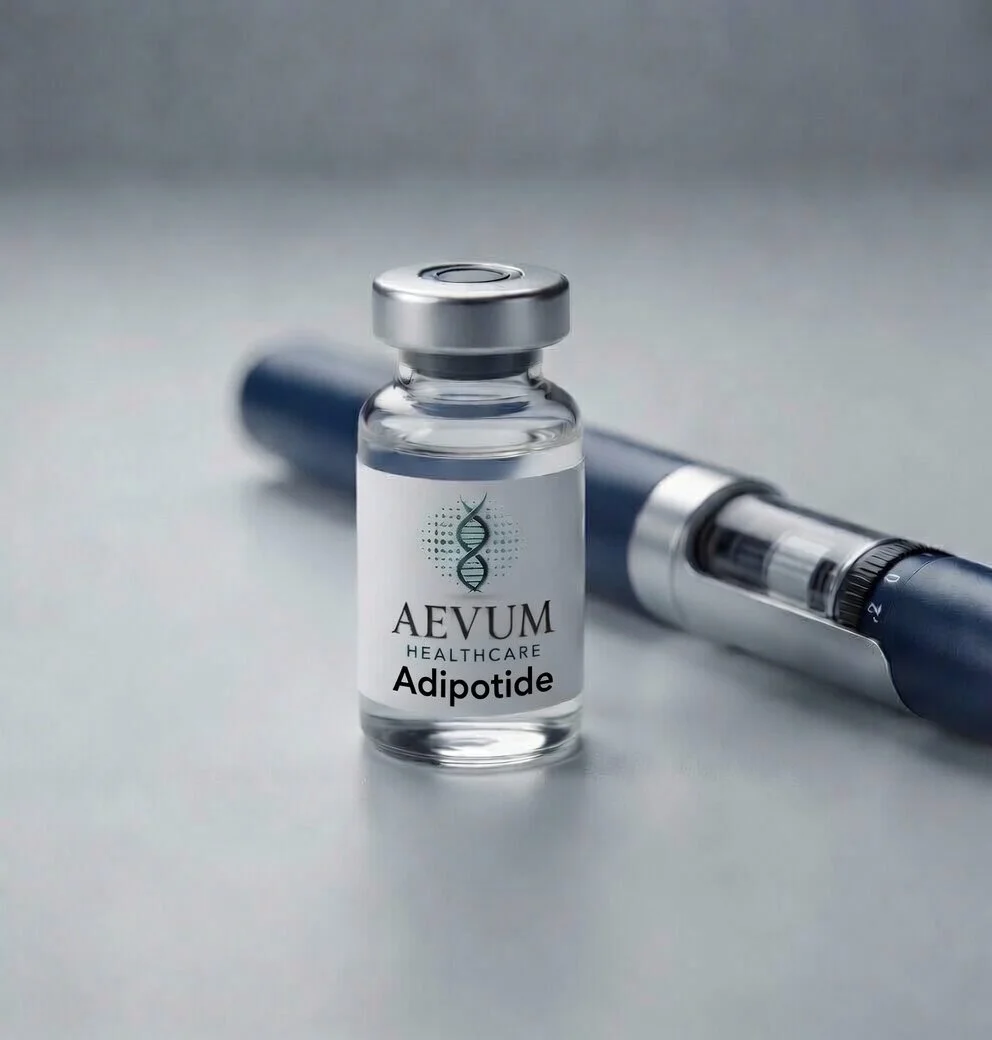
Adipotide Fat-Targeting Proapoptotic Peptide
Adipotide (also known as FTP-TP or Prohibitin-targeting Peptide) is a synthetic peptidomimetic designed to selectively target and destroy visceral white adipose tissue. It is one of the first compounds developed specifically to induce targeted apoptosis in fat cells.
Key Characteristics:
Structure: Chimeric peptide consisting of a prohibitin-targeting motif (CKGGRAKDC) linked to a pro-apoptotic sequence (KLAKLAK)₂
Mechanism: Binds to prohibitin on the surface of white adipose tissue vasculature → disrupts mitochondrial membranes in endothelial cells of fat tissue → induces apoptosis specifically in adipose blood vessels, leading to fat cell death and tissue remodeling
Selectivity: Highly specific for visceral (abdominal) fat vasculature with minimal effect on subcutaneous fat or other organs
Action: Causes rapid and significant reduction in white adipose tissue volume without affecting lean muscle mass
Research Applications:
Targeted obesity and visceral fat reduction studies
Metabolic syndrome and insulin resistance models
Adipose tissue remodeling and angiogenesis research
Non-invasive fat loss and body composition investigations
Comparison with traditional weight-loss compounds and GLP-1 agonists
Adipotide is notable in laboratory research for its unique mechanism of action — it does not suppress appetite or alter metabolism directly, but instead physically reduces fat mass by destroying the blood supply to white adipose tissue. It remains a valuable tool for studying selective adipose tissue ablation.
For laboratory research use only. Not intended for human or veterinary use.
Adipotide Fat-Targeting Proapoptotic Peptide
Adipotide (also known as FTP-TP or Prohibitin-targeting Peptide) is a synthetic peptidomimetic designed to selectively target and destroy visceral white adipose tissue. It is one of the first compounds developed specifically to induce targeted apoptosis in fat cells.
Key Characteristics:
Structure: Chimeric peptide consisting of a prohibitin-targeting motif (CKGGRAKDC) linked to a pro-apoptotic sequence (KLAKLAK)₂
Mechanism: Binds to prohibitin on the surface of white adipose tissue vasculature → disrupts mitochondrial membranes in endothelial cells of fat tissue → induces apoptosis specifically in adipose blood vessels, leading to fat cell death and tissue remodeling
Selectivity: Highly specific for visceral (abdominal) fat vasculature with minimal effect on subcutaneous fat or other organs
Action: Causes rapid and significant reduction in white adipose tissue volume without affecting lean muscle mass
Research Applications:
Targeted obesity and visceral fat reduction studies
Metabolic syndrome and insulin resistance models
Adipose tissue remodeling and angiogenesis research
Non-invasive fat loss and body composition investigations
Comparison with traditional weight-loss compounds and GLP-1 agonists
Adipotide is notable in laboratory research for its unique mechanism of action — it does not suppress appetite or alter metabolism directly, but instead physically reduces fat mass by destroying the blood supply to white adipose tissue. It remains a valuable tool for studying selective adipose tissue ablation.
For laboratory research use only. Not intended for human or veterinary use.