 Image 1 of 1
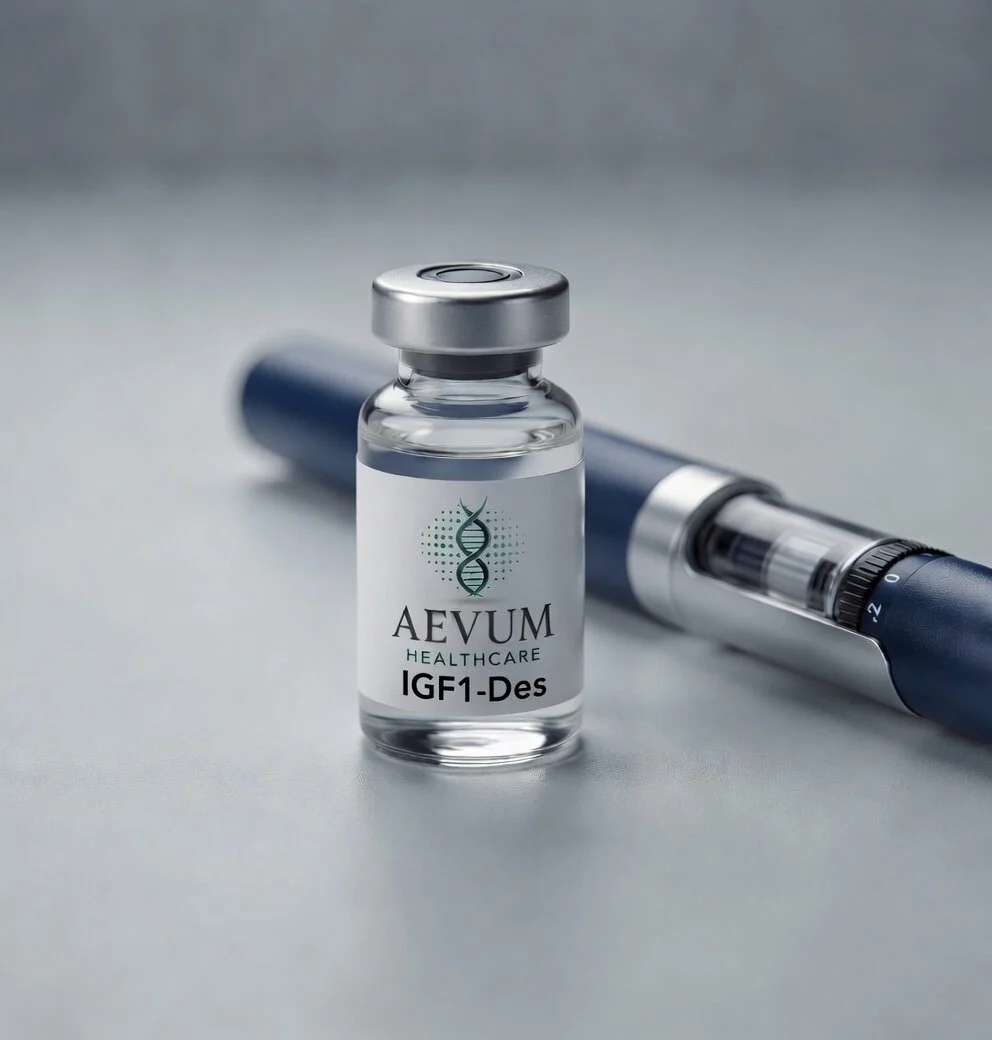
IGF-1 Des Insulin-like Growth Factor-1 Des (1-3)
IGF-1 Des is a truncated, highly potent analog of Insulin-like Growth Factor-1. It lacks the first three amino acids (Gly-Pro-Glu) at the N-terminus, resulting in significantly reduced binding affinity to IGF-binding proteins (IGFBPs) and markedly increased biological activity compared to both native IGF-1 and IGF-1 LR3.
Key Characteristics:
Structure: Des(1-3) IGF-1 – truncated form missing the N-terminal tripeptide
Potency: 2–10 times more potent than standard IGF-1 in many tissue types
IGFBP Affinity: Dramatically lower binding to IGF-binding proteins, allowing higher free IGF-1 levels at the cellular level
Receptor Interaction: Strong agonist at the IGF-1 receptor
Research Applications:
Muscle cell proliferation and differentiation (hyperplasia + hypertrophy)
Enhanced protein synthesis and anabolic signaling
Accelerated recovery and tissue repair
Neuroprotection and brain-derived growth factor studies
Metabolic regulation and fat utilization research
Studies on localized growth factor effects
Due to its high potency and reduced IGFBP binding, IGF-1 Des is frequently used in laboratory research exploring maximal anabolic and regenerative responses, particularly in muscle and neural tissue models.
For laboratory research use only. Not for human or veterinary use.
IGF-1 Des Insulin-like Growth Factor-1 Des (1-3)
IGF-1 Des is a truncated, highly potent analog of Insulin-like Growth Factor-1. It lacks the first three amino acids (Gly-Pro-Glu) at the N-terminus, resulting in significantly reduced binding affinity to IGF-binding proteins (IGFBPs) and markedly increased biological activity compared to both native IGF-1 and IGF-1 LR3.
Key Characteristics:
Structure: Des(1-3) IGF-1 – truncated form missing the N-terminal tripeptide
Potency: 2–10 times more potent than standard IGF-1 in many tissue types
IGFBP Affinity: Dramatically lower binding to IGF-binding proteins, allowing higher free IGF-1 levels at the cellular level
Receptor Interaction: Strong agonist at the IGF-1 receptor
Research Applications:
Muscle cell proliferation and differentiation (hyperplasia + hypertrophy)
Enhanced protein synthesis and anabolic signaling
Accelerated recovery and tissue repair
Neuroprotection and brain-derived growth factor studies
Metabolic regulation and fat utilization research
Studies on localized growth factor effects
Due to its high potency and reduced IGFBP binding, IGF-1 Des is frequently used in laboratory research exploring maximal anabolic and regenerative responses, particularly in muscle and neural tissue models.
For laboratory research use only. Not for human or veterinary use.