 Image 1 of 1
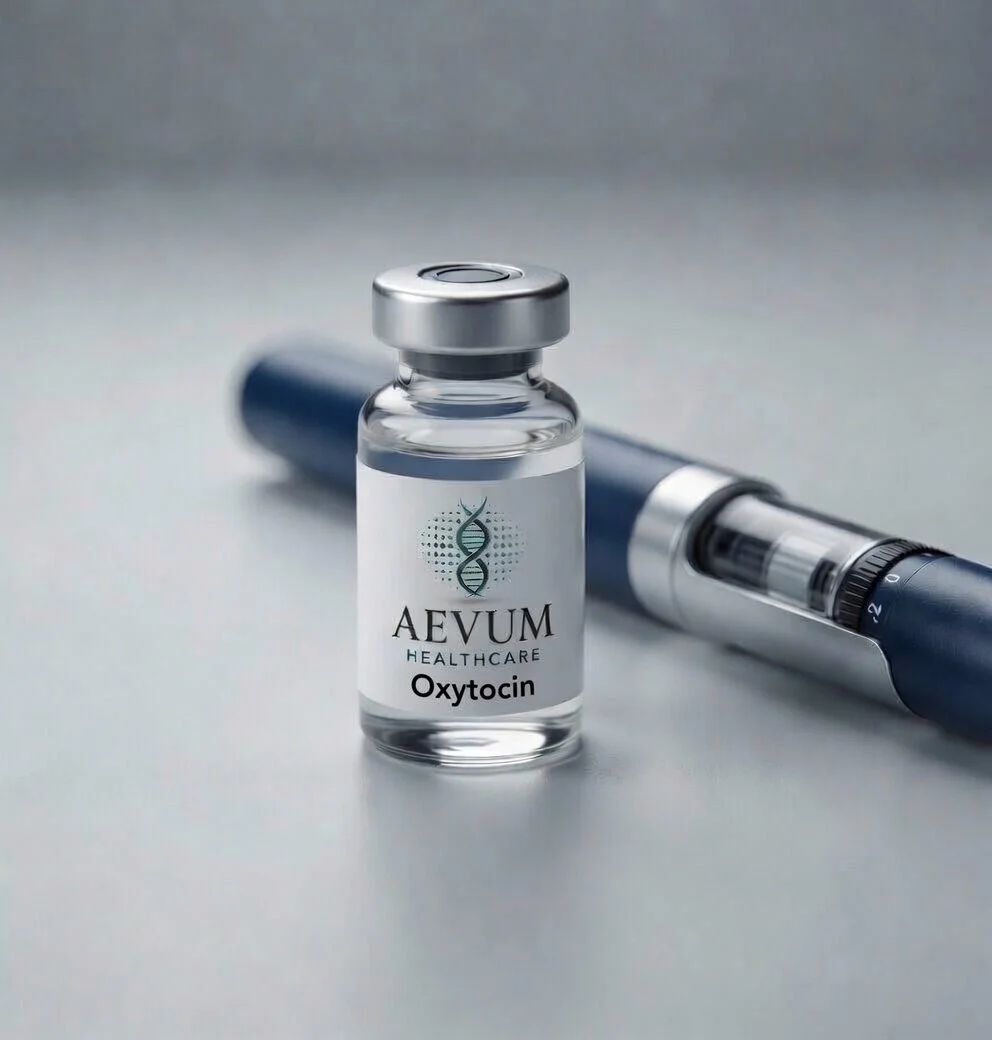
Oxytocin Peptide
Oxytocin is a nine-amino acid cyclic peptide hormone and neurotransmitter, classically known as the “love hormone” or “bonding hormone.” It is synthesized in the hypothalamus and released by the posterior pituitary gland.
Key Characteristics:
Sequence: Cys-Tyr-Ile-Gln-Asn-Cys-Pro-Leu-Gly-NH₂ (with a disulfide bridge between Cys¹ and Cys⁶)
Mechanism: Acts via G-protein-coupled oxytocin receptors (OXTR) widely distributed in the brain and peripheral tissues
Primary Actions: Promotes social bonding, trust, empathy, and maternal behavior; also functions as a potent uterine contractor and milk ejection stimulator
Half-life: Very short (~3–5 minutes) in circulation
Research Applications:
Social behavior, trust, and attachment studies
Autism spectrum disorder and social cognition research
Anxiety, stress reduction, and emotional regulation models
Pair bonding and reproductive behavior investigations
Pain modulation and anti-inflammatory effects
Labor induction and lactation studies
Neuroendocrine regulation of empathy and prosocial behavior
Oxytocin is extensively studied for its profound effects on social cognition, emotional processing, and interpersonal relationships, as well as its roles in reproductive physiology and stress resilience.
For laboratory research use only. Not intended for human or veterinary use.
Oxytocin Peptide
Oxytocin is a nine-amino acid cyclic peptide hormone and neurotransmitter, classically known as the “love hormone” or “bonding hormone.” It is synthesized in the hypothalamus and released by the posterior pituitary gland.
Key Characteristics:
Sequence: Cys-Tyr-Ile-Gln-Asn-Cys-Pro-Leu-Gly-NH₂ (with a disulfide bridge between Cys¹ and Cys⁶)
Mechanism: Acts via G-protein-coupled oxytocin receptors (OXTR) widely distributed in the brain and peripheral tissues
Primary Actions: Promotes social bonding, trust, empathy, and maternal behavior; also functions as a potent uterine contractor and milk ejection stimulator
Half-life: Very short (~3–5 minutes) in circulation
Research Applications:
Social behavior, trust, and attachment studies
Autism spectrum disorder and social cognition research
Anxiety, stress reduction, and emotional regulation models
Pair bonding and reproductive behavior investigations
Pain modulation and anti-inflammatory effects
Labor induction and lactation studies
Neuroendocrine regulation of empathy and prosocial behavior
Oxytocin is extensively studied for its profound effects on social cognition, emotional processing, and interpersonal relationships, as well as its roles in reproductive physiology and stress resilience.
For laboratory research use only. Not intended for human or veterinary use.