 Image 1 of 1
Tesamorelin Growth Hormone-Releasing Hormone (GHRH) Analog
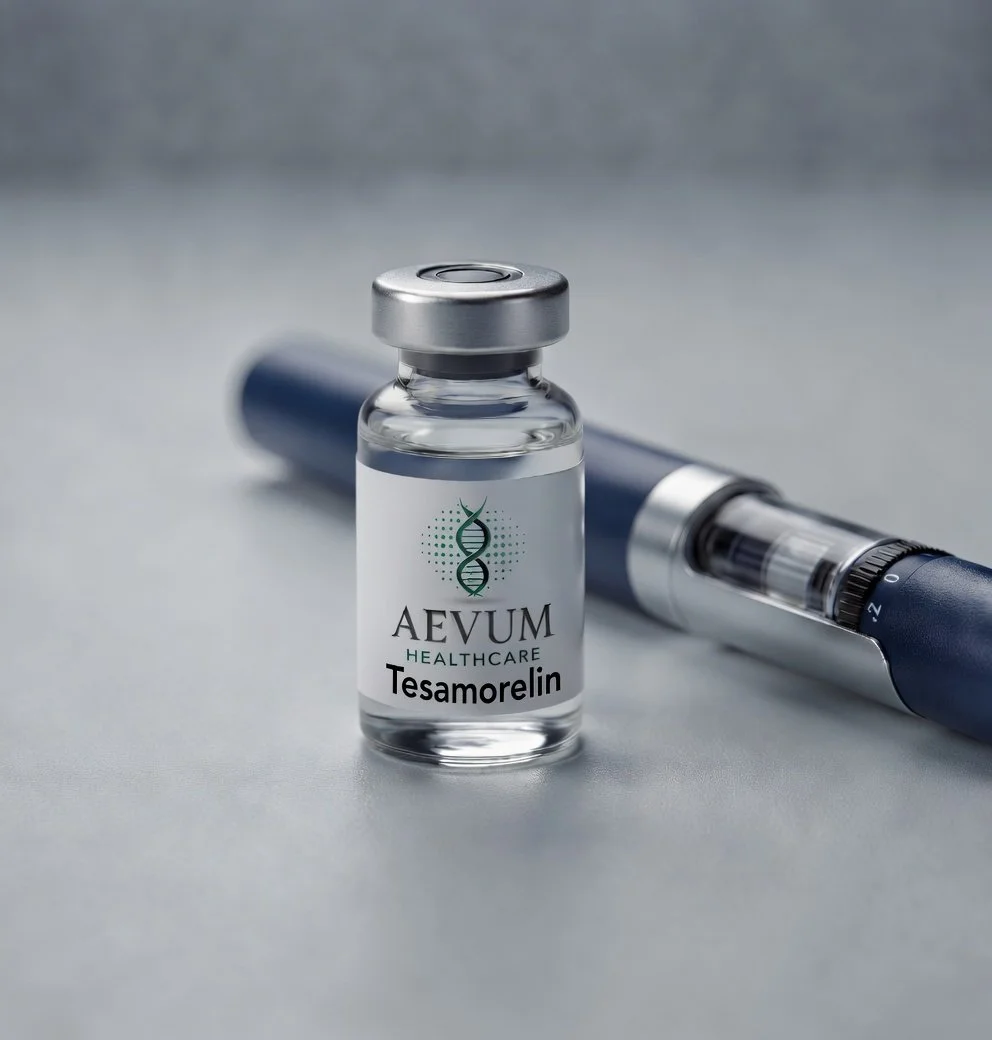
Tesamorelin is a synthetic 44-amino acid peptide analog of Growth Hormone-Releasing Hormone (GHRH). It features a trans-3-hexenoyl group attached to the N-terminal tyrosine, which increases its stability and potency compared to native GHRH.
Key Characteristics:
Mechanism of Action: Selective agonist of the GHRH receptor on pituitary somatotroph cells, stimulating the pulsatile release of endogenous growth hormone (GH)
Specificity: Significantly increases GH secretion with minimal direct effect on other pituitary hormones
Pharmacokinetics: Longer half-life than natural GHRH due to N-terminal modification
Downstream Effects: Elevates circulating IGF-1 levels in a physiological, pulsatile manner
Research Applications:
Growth hormone deficiency and age-related decline studies
Visceral adipose tissue (VAT) reduction and body composition research
Metabolic syndrome and lipid metabolism investigations
HIV-associated lipodystrophy models
Cognitive function and neuroprotection studies
Muscle preservation and recovery research
Tesamorelin is widely used in laboratory settings to study the physiological effects of increased endogenous GH secretion without the supraphysiological spikes associated with direct GH administration. It is particularly noted for its ability to preferentially reduce visceral fat while preserving lean muscle mass.
For laboratory research use only. Not for human or veterinary use.
Tesamorelin Growth Hormone-Releasing Hormone (GHRH) Analog
Tesamorelin is a synthetic 44-amino acid peptide analog of Growth Hormone-Releasing Hormone (GHRH). It features a trans-3-hexenoyl group attached to the N-terminal tyrosine, which increases its stability and potency compared to native GHRH.
Key Characteristics:
Mechanism of Action: Selective agonist of the GHRH receptor on pituitary somatotroph cells, stimulating the pulsatile release of endogenous growth hormone (GH)
Specificity: Significantly increases GH secretion with minimal direct effect on other pituitary hormones
Pharmacokinetics: Longer half-life than natural GHRH due to N-terminal modification
Downstream Effects: Elevates circulating IGF-1 levels in a physiological, pulsatile manner
Research Applications:
Growth hormone deficiency and age-related decline studies
Visceral adipose tissue (VAT) reduction and body composition research
Metabolic syndrome and lipid metabolism investigations
HIV-associated lipodystrophy models
Cognitive function and neuroprotection studies
Muscle preservation and recovery research
Tesamorelin is widely used in laboratory settings to study the physiological effects of increased endogenous GH secretion without the supraphysiological spikes associated with direct GH administration. It is particularly noted for its ability to preferentially reduce visceral fat while preserving lean muscle mass.
For laboratory research use only. Not for human or veterinary use.